
1. Standard label dosing
For adults, the approved prescribing information sets out a short and unusually simple scheme.
| Indication | Dose | Timing |
|---|---|---|
| Narcolepsy | 200 mg once daily | Morning |
| Obstructive sleep apnea with residual sleepiness on CPAP | 200 mg once daily | Morning |
| Shift work disorder | 200 mg once daily | About 1 hour before the shift starts |
That is the entire approved scheme. The label contains no titration schedule, no loading dose, and no escalation toward a maintenance level. Most patients begin at the therapeutic dose and remain there.
Two adjustments do appear in the labelling:
- Severe hepatic impairment: reduce to one half of the usual dose.
- Geriatric patients: lower doses and closer monitoring should be considered.
2. Available tablet strengths
Modafinil is manufactured as 100 mg and 200 mg oral tablets and nothing else. There is no liquid, no sublingual form, no extended release version, and no patch.
The 100 mg tablet exists mainly to serve the hepatic and geriatric reductions, and to give prescribers room at initiation. Some 200 mg tablets are scored.
Absorption from the gut is rapid, with peak plasma concentration around 2 to 4 hours after dosing. Food pushes absorption back by roughly an hour without altering the total amount absorbed, so eating changes when the drug arrives rather than how much of it does.
3. Why 200 mg is the standard dose
The figure is not arbitrary, and the pharmacology behind it explains why larger doses disappoint people who expect proportionally larger effects.
A PET imaging study led by Volkow and colleagues, published in JAMA, measured dopamine transporter occupancy in healthy volunteers at both 200 mg and 400 mg. Both doses produced substantial blockade at the dopamine and norepinephrine transporters, yet the 400 mg condition did not add meaningfully to striatal occupancy over 200 mg.
Put plainly: at 200 mg the relevant transporters are already occupied to a considerable degree, so additional drug cannot buy proportionally more target engagement once the target approaches saturation. That is a receptor level account of a clinical observation, namely that doubling the dose does not double the effect.
Doubling the dose adds little transporter occupancy because the target is already close to saturation, while exposure to unwanted effects keeps climbing with plasma concentration.
- 200 mg, dopamine transporter occupancy78
- 400 mg, dopamine transporter occupancy82
- 200 mg, reported side effect burden38
- 400 mg, reported side effect burden71
Indexed illustration of the pattern described in the imaging and label literature, not measured effect sizes.
What extra drug does reliably increase is exposure to unwanted effects, including headache, anxiety, insomnia and cardiovascular effects, all of which scale with plasma concentration in a way that benefit does not.
4. What 400 mg actually does
The label speaks to this directly, noting that single daily doses up to 400 mg have been well tolerated while adding that there is no consistent evidence of additional benefit beyond 200 mg per day.
Two separate claims sit inside that sentence and are routinely merged:
- 400 mg is tolerated, meaning it is not in itself a dangerous quantity for a healthy adult.
- 400 mg does not consistently work better, meaning the trials failed to show extra benefit.
Both hold at once. The common misreading runs from the first to a conclusion the second denies: that because the higher dose is safe, it must be a sensible route to a stronger effect. On the evidence, it mostly buys the extra side effect burden without the extra benefit, which is a poor trade.
5. Timing and why it matters
For most people, timing carries more weight than dose, and the reason follows directly from pharmacokinetics. Elimination half life is roughly 15 hours.

| Time after dose | Approximate drug remaining |
|---|---|
| 2 to 4 hours | Peak concentration |
| 15 hours | About 50% |
| 30 hours | About 25% |
A dose taken at 8:00 AM is still near half its peak level around 11:00 PM. A dose taken at noon reaches that point around 3:00 AM.
An 8:00 AM dose peaks late morning and is still near half its peak level around 11:00 PM. That single fact drives most of the sleep trouble people report.
This is the mechanism behind the most frequent complaint about modafinil: the afternoon dose that felt productive is the reason sleep never came. Because the resulting sleep debt produces daytime sleepiness of its own, the pattern lets the drug manufacture the symptom it is being taken for.
The morning instruction for narcolepsy and sleep apnea, and the one hour pre shift instruction for shift work disorder, both exist to place the active window inside intended waking hours.
8:00 AM
Morning dose
Label timing for narcolepsy and sleep apnea
10:00 to 12:00
Peak plasma level
Absorption complete, effect at its strongest
1 h pre shift
Shift work timing
Dose placed ahead of the working window
Early afternoon
Split dose window
Studied only for residual late day sleepiness
11:00 PM
About half remains
The usual reason sleep does not arrive
6. Split dosing
Split dosing, typically 200 mg in the morning and 200 mg at midday, appears in the clinical literature for one scenario: patients who respond well early in the day but see sleepiness return in the late afternoon or evening.
Studies in narcolepsy patients found split dosing generally well tolerated over short term trials, with better sustained late day wakefulness than a single 200 mg dose.
The framing matters. This was examined in selected individuals with an identified residual sleepiness problem, under supervision, over short periods. It is not a general strategy, it is not needed for effective treatment in most cases, and the midday dose carries an obvious sleep disruption risk given the half life. The stated goal throughout that literature is sustained alertness at the lowest effective dose.
7. Dose adjustments in special populations
Severe hepatic impairment
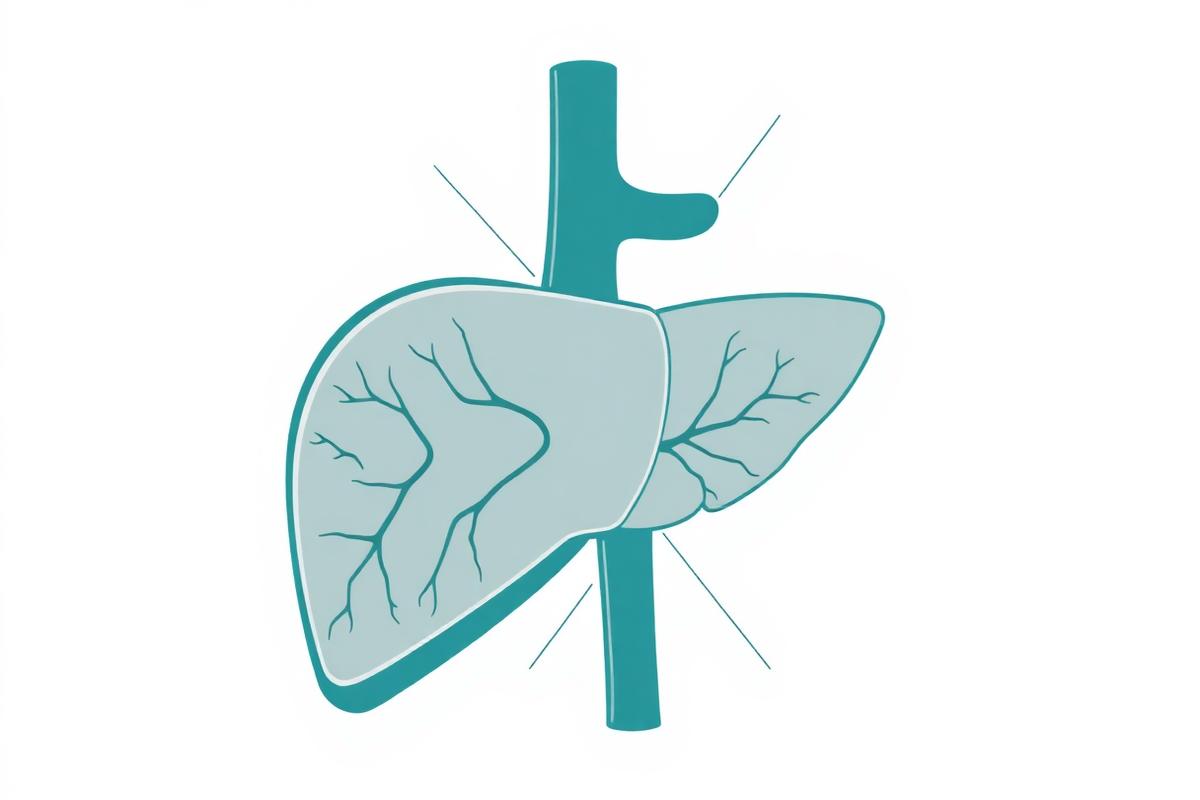
This is the adjustment that matters most, because the pharmacokinetic shift is large. In the cirrhotic patients studied for the label, most at Child Pugh stage C, nearly all jaundiced and all with ascites, oral clearance dropped by around 60% and steady state concentration roughly doubled relative to normal liver function.
The label therefore directs halving the dose in severe hepatic impairment, commonly a ceiling of 100 mg daily.
In severe cirrhosis, oral clearance falls by around 60% and steady state concentration roughly doubles, so a standard tablet behaves like a much larger one.
- Healthy adult, 200 mgReference exposure
- Severe hepatic impairment, 200 mgRoughly double
- Severe hepatic impairment, 100 mgLabel directed halving
- Older adult, 200 mgReduced clearance with age
Stated plainly, in someone with significant cirrhosis a standard 200 mg tablet can produce plasma levels comparable to 400 to 500 mg in a healthy liver. Hepatic metabolism through CYP3A4 is the dominant clearance route, which makes liver function the main determinant of individual exposure.
Renal impairment
Counterintuitively, this matters less. In a single dose 200 mg study, severe chronic renal failure with creatinine clearance at or below 20 mL per minute did not significantly influence modafinil's own pharmacokinetics, although exposure to modafinil acid, an inactive metabolite, rose ninefold.
No renal adjustment is established and no formal recommendation exists. Caution is still advised in severe renal impairment, given the metabolite accumulation and the absence of long term data.
Older adults
Hepatic clearance declines with age, so older patients can accumulate drug at doses that are unremarkable in younger adults. The label calls for consideration of lower doses and close monitoring in geriatric patients. In practice, 100 mg once daily is widely recommended as a starting point past 65, moving to 200 mg only if the lower dose proves inadequate and is well tolerated.
Children and adolescents
Modafinil holds no FDA approval for any pediatric indication, and effectiveness and safety in this group have not been established. The 2006 pediatric application was rejected partly because of a confirmed case of Stevens Johnson syndrome during trials.
Pregnancy
This is a question of use rather than dose. Regulators including the EMA, Health Canada, the MHRA and the TGA have contraindicated modafinil in pregnancy and in women of childbearing potential who are not using effective non hormonal contraception, on the basis of suspected congenital malformations. No dose is regarded as established safe in pregnancy.
8. Off label dosing: what is not established
This section exists because it is what a large share of people searching for modafinil dosage are actually after, and the honest answer differs from what most pages offer.
There is no established dose for cognitive enhancement in healthy adults, because that is not an approved indication and no dose finding work has been done for it. What exists is incidental information from research settings.
- Cognitive enhancement trials in healthy adults have most often used 100 mg to 200 mg.
- The 2015 Battleday and Brem systematic review of 24 studies reported the most consistent benefits in complex executive function tasks at those doses, with noticeably larger effects under sleep deprivation than in well rested subjects.
Three things follow that are worth saying directly.
- Studied doses are not recommended doses. A trial dose was chosen to answer a research question, in a monitored setting, with screened participants. No regulator has evaluated it as a recommendation.
- The saturation finding argues against escalation. Since 400 mg does not meaningfully raise transporter occupancy above 200 mg, the intuition that a bigger dose produces a bigger cognitive effect is not supported by the target engagement data. Higher doses reliably add side effects and do not reliably add benefit.
- The screening that makes a dose safe does not happen outside a clinical relationship. The hepatic adjustment depends on somebody knowing your liver function, the cardiac cautions on somebody knowing your cardiovascular history, the contraceptive interaction on somebody asking. A number on a page substitutes for none of that, which is the practical reason, quite apart from the legal one, that this drug is prescription only.
9. Missed doses and overdose
Missed dose
With a half life near 15 hours, a dose taken late in the day threatens that night's sleep. The general rule for once daily morning medicines applies: if the dose has been missed and the day is already advanced, skipping is usually preferable to taking it late. Doses should not be doubled to compensate, and the question belongs with the prescribing clinician or a pharmacist.
Overdose
Modafinil's overdose picture differs meaningfully from that of amphetamines, in keeping with its different mechanism.
- At moderately supratherapeutic doses, expect amplified versions of the familiar side effects: agitation, anxiety, insomnia, tachycardia, raised blood pressure, nausea and tremor.
- At substantially higher doses, severe agitation, sustained sinus tachycardia, hypertension and, in predisposed individuals, potential for seizures have been described. The label reports single cases of dyskinesia and of slowed clotting at extreme doses. No QTc prolongation or ventricular arrhythmia has been attributed to modafinil alone in the published literature.
- Trial data includes protocol specified doses of 1000 to 1600 mg daily given to a small number of subjects, some for one to three weeks.
Groups for whom an excess dose carries more consequence than it would in a healthy adult include people with severe hepatic impairment, where a standard dose is already effectively supratherapeutic, people with left ventricular hypertrophy, mitral valve prolapse or a history of stimulant associated chest pain, and people with a seizure history or uncontrolled hypertension.
10. Armodafinil dose equivalence
Because prescribers sometimes move between the two, the equivalence is worth stating: 150 mg armodafinil stands against 200 mg modafinil, a ratio that reflects the approved dose of each rather than a tidy conversion factor.
Milligram for milligram, armodafinil delivers roughly 33 to 40% greater systemic exposure. The two drugs did not meet FDA bioequivalence criteria, so they are genuinely not interchangeable at equal milligram doses, and switching involves a dose change made by a prescriber.
| Drug | Standard adult dose | Relative exposure per mg |
|---|---|---|
| Modafinil | 200 mg once daily | Reference |
| Armodafinil | 150 mg once daily | Roughly 33 to 40% higher |
11. Frequently asked questions
What is the standard dose of modafinil?
200 mg once daily across all three approved indications, taken in the morning for narcolepsy and obstructive sleep apnea, and roughly one hour before the shift begins for shift work disorder.
Is 100 mg of modafinil enough?
It can be. The 100 mg tablet exists for hepatic impairment, older patients and prescriber flexibility at initiation, and 100 mg is widely suggested as a starting point past 65. Whether it is sufficient for a given person is a clinical judgement.
Is 400 mg of modafinil better than 200 mg?
Usually not. The label records that 400 mg has been well tolerated while noting no consistent evidence of added benefit over 200 mg, and imaging work found no meaningful gain in dopamine transporter occupancy at the higher dose because the target is already near saturation. The exception is selected patients with residual late day sleepiness, where 400 mg in total, often split, improved sustained wakefulness.
When should I take modafinil?
The label specifies morning dosing for narcolepsy and sleep apnea, and about an hour before the shift for shift work disorder. With a half life near 15 hours, later dosing puts that night's sleep at risk.
Can I take modafinil with food?
Yes. A meal pushes absorption back by roughly an hour without changing how much drug is absorbed, so food shifts onset rather than total exposure.
How long does 200 mg of modafinil last?
Elimination half life sits near 15 hours, so about half the dose is still present 15 hours later. The felt effect normally fades well before the drug has cleared.
Does modafinil dosage need adjusting for liver problems?
Yes, substantially. In severe hepatic impairment clearance falls by around 60% and steady state concentration roughly doubles, and the label directs halving the dose, commonly to a maximum of 100 mg daily.
What about kidney problems?
Severe renal failure did not meaningfully alter modafinil's own pharmacokinetics in the label study, although an inactive metabolite accumulated ninefold. No renal adjustment is established, though caution is advised.
Can you build tolerance and need a higher dose?
Formal evidence of pharmacological tolerance is thin, and clinical data in sleep disorders points to efficacy holding up over extended treatment. Reports of fading effects are common but hard to separate from expectation and accumulated sleep debt, and any escalation is a prescriber decision given that higher doses add side effects without proportional benefit.
12. References
- PROVIGIL (modafinil) Tablets C-IV, FDA prescribing information, 2015 label
- Modafinil tablet, DailyMed, National Library of Medicine
- Modafinil, StatPearls, NCBI Bookshelf (Greenblatt K, Adams N)
- Modafinil Monograph for Professionals, Drugs.com
- Volkow ND, et al. Effects of modafinil on dopamine and dopamine transporters in the male human brain. JAMA. 2009;301(11):1148 to 1154
- Battleday RM, Brem AK. Modafinil for cognitive neuroenhancement in healthy non sleep deprived subjects: a systematic review. Eur Neuropsychopharmacol. 2015;25(11):1865 to 1881
- Schwartz JRL, Feldman NT, et al. Split dose modafinil in narcolepsy with residual sleepiness
- Darwish M, et al. Armodafinil and modafinil have substantially different pharmacokinetic profiles despite having the same terminal half lives. Clin Drug Investig. 2009